Guide
Do Brain Supplements Work? What Studies Show About MemoPryl Ingredients
Do brain supplements work? Mostly not in the way ads suggest. Large reviews call the evidence for memory supplements inconclusive, and the best-known ginkgo trial found no drop in dementia. A few small trials show modest gains for single ingredients. No study has tested MemoPryl itself, so read the bottle and ask your doctor first.
By the MemoPryl label deskUpdated
Do brain supplements work?
Do brain supplements work? For most people, the research says the benefit is small, uncertain or missing. NCCIH describes the evidence for most memory supplements as inconclusive, limited or inconsistent (NCCIH, Supplements and Cognition).
The National Academies reached a similar view. It found encouraging but unfinished evidence for cognitive training, blood pressure control and physical activity, and too little evidence for supplements (National Academies 2017 report).
Some single ingredients show small signals in small trials. A small signal is not proof, and a trial of one ingredient says nothing about a capsule that mixes several.
Six ingredient names are tied to it from a sibling pack, with no amounts printed. Whatever the studies below show, they describe the single ingredient at the amount tested, not your bottle.
What did studies find for the six names tied to MemoPryl?
Each name has a different record. None has strong proof of better memory in healthy adults, and two carry real medicine cautions.
| Ingredient | What the research shows | Main caution |
|---|---|---|
| Ginkgo biloba leaf | The GEM trial followed 3,069 adults aged 75 or older and found no lower dementia rate than placebo (DeKosky 2008, GEM trial, JAMA). Benefit in healthy people is uncertain (NCCIH, Ginkgo). | May raise bleeding risk (FDA, Mixing Meds and Supplements) |
| Bacopa (brahmi) | A review of nine trials of 12 weeks or more found it may speed attention (Kongkeaw 2014, Bacopa meta-analys.). NIH's liver database says no adequate trial shows it works for any disease (LiverTox, Bacopa monnieri). | Nausea, cramps, loose stools |
| Phosphatidylserine | One trial of 78 adults found gains only in people who began with lower scores (Kato-Kataoka 2010, soy PS trial). FDA allowed a claim only with a warning of very limited science (FDA letter, PS health claim). | Stomach upset, insomnia (Cleveland Clinic, Phosphatidyl.) |
| N-acetyl L-carnitine | In a Cochrane review, it had no effect on dementia severity, and routine use was not backed (NIH ODS, Carnitine). | Nausea; seizure risk in some people |
| St. John's wort | Studied for low mood, not memory, and not consistently effective even there (NCCIH, St. John's Wort in depth). | Weakens many medicines (NCCIH, St. John's Wort safety) |
| L-glutamine | No memory trial is cited. MSK does not describe it as a memory supplement (MSK, Glutamine). | Stomach symptoms, headache |
How much of each ingredient did studies use?
Studies used set amounts, often for months. Phosphatidylserine was tested at 100 or 300 mg a day, ginkgo at 240 mg a day, bacopa at 300 to 600 mg and acetyl-L-carnitine at 1 to 3 grams.
The bars show those study ranges. The dashed bar is the amount in MemoPryl: not printed on any image we have. Without a Supplement Facts panel, nobody can say how a capsule compares.
Which brain supplement claims hold up?
Short claims such as "supports focus" are allowed on a label without proof, as long as the FDA disclaimer appears (FDA, Structure/Function Claims). That is why the claim and the evidence need to be read side by side.
FDA does not approve supplements before they go on sale (FDA, Using Dietary Supplements). The FTC expects health claims to rest on solid human studies, not personal stories (FTC, Health Products Guidance).
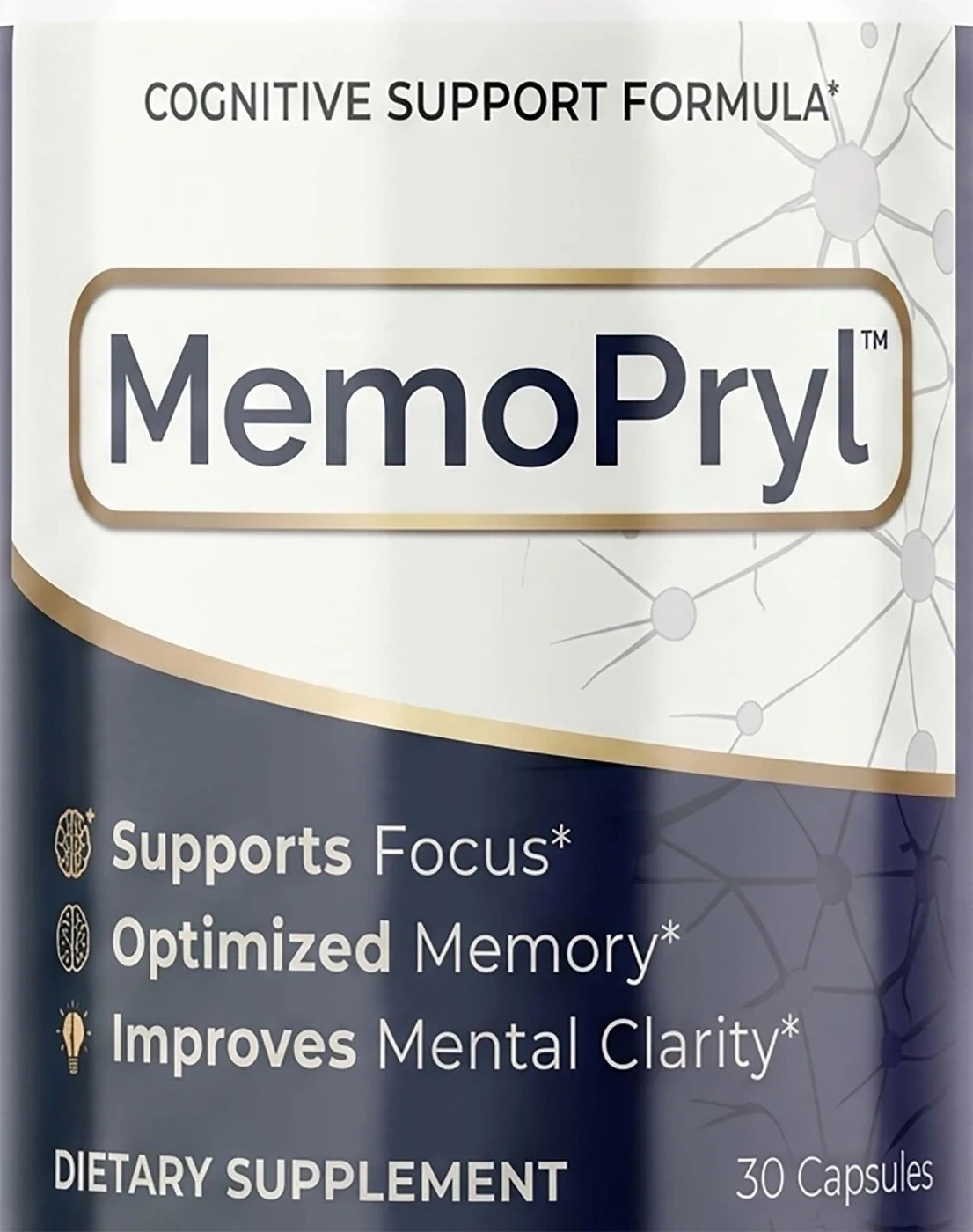
- Label A“Optimized Memory*”MemoPryl itself has not been tested in a trial. Ginkgo did not lower dementia rates against placebo in the 3,069-person GEM trial, and NCCIH calls the evidence for most supplements inconclusive. (DeKosky 2008, GEM trial, JAMA) (NCCIH, Supplements and Cognition)
- Label A“Improves Mental Clarity*”'Improves' is a strong verb to use in a structure/function claim. A meta-analysis of bacopa trials lasting 12 weeks or more found faster attention at 300 mg or more of extract, an amount none of the bottle images prints. (Kongkeaw 2014, Bacopa meta-analys.) (LiverTox, Bacopa monnieri)
- Label A“Supports Focus*”St. John's wort was studied for mood rather than focus, and glutamine has no memory trial. None of the bottle images prints an amount for any ingredient. (NCCIH, St. John's Wort in depth) (MSK, Glutamine)
- Label B“Supports Concentration*”The evidence is for single ingredients, at doses this site cannot see. A health claim generally needs randomized human tests of the product itself. (FTC, Health Products Guidance)
- Label B“Supports Brain Energy*”'Brain energy' is not something medicine measures. In dementia, a Cochrane review found acetyl-L-carnitine had no effect on severity. (NIH ODS, Carnitine) (Pennisi 2020, ALC in dementia)
- Label B“Supports Productivity*”Supplement trials do not measure productivity. In the FTC's view, personal stories are never enough to back a health claim. (FTC, Health Products Guidance)
- Both labelsThe FDA asteriskStructure/function wording is permitted when the FDA disclaimer goes with it. It is neither FDA approval nor a disease claim. (FDA, Structure/Function Claims)
- Badges“Doctor formulated”, “GMP certified”, “FDA registered”None of them names a doctor, certifier or audit. FDA registers facilities but approves neither them nor the supplement. (FDA, Hidden Ingredients) (FDA, Using Dietary Supplements)
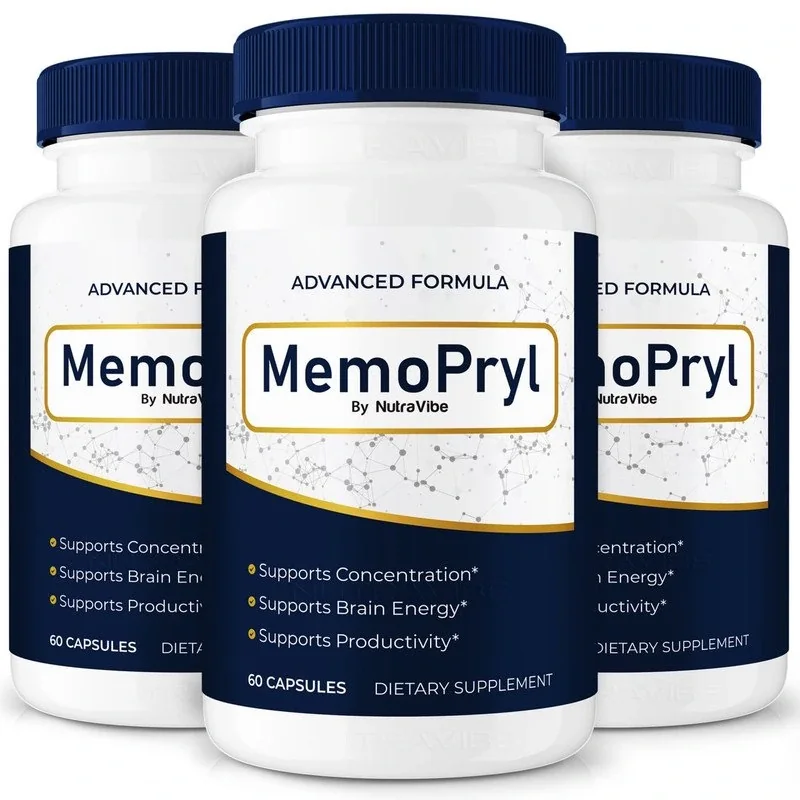
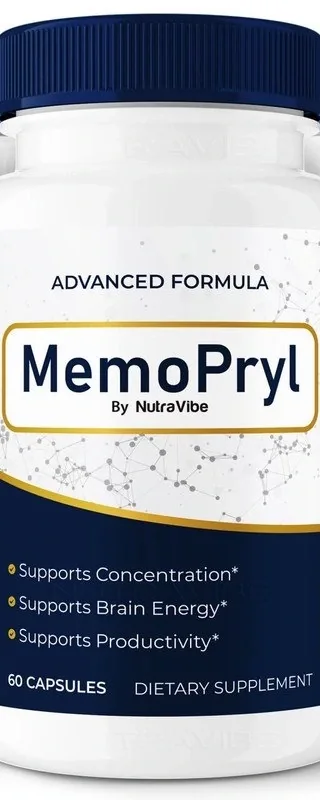
- Bottle30 capsules and Cognitive Support, or 60 capsules and Advanced FormulaThe brand set's two bottle images do not agree. Only the bottle you receive settles it.
The claims exactly as the two bottle images print them. A health claim needs competent and reliable scientific evidence, usually human trials of the same product (FTC, Health Products Guidance).
MemoPryl: capsules in 2, 3 or 6 bottlesRead the bottle · check medicines first · 60-day window (confirm)
See packsWhat has better evidence than a capsule?
Moving more, sleeping well and eating a plant-rich diet have firmer support than any supplement. Each costs little and helps the rest of the body too.
Activity
CDC says short bursts of activity can lift memory and thinking, and regular activity may lower the chance of dementia (CDC, Physical Activity and Brain). The guideline for adults is 150 to 300 minutes of moderate activity a week (HHS, Physical Activity Guidelines).
Sleep
Seven to nine hours a night. Both deep and REM sleep help you store memories, and poor sleep hurts recall (NIA, Sleep and Older Adults).
Food
In large observational studies, people who closely followed Mediterranean or MIND eating patterns did better on thinking tests. This shows a link, not cause (AAIC 2017, diet and cognition).
Compare them with a capsule in MemoPryl vs other options.
Are brain supplements safe to take with medicine?
Not always. Ask your doctor or pharmacist before you start, and keep taking prescribed medicine exactly as directed.
Natural does not mean safe (NCCIH, Using Supplements Wisely). St. John's wort can weaken many medicines, including antidepressants, birth control pills and blood thinners (NCCIH, St. John's Wort safety). Ginkgo, aspirin and warfarin can each thin the blood, so combining them may raise bleeding risk (FDA, Mixing Meds and Supplements). Before surgery, ask when to stop.
If you or someone close notices a change in memory, see a doctor first. A visit can find causes that are treatable (NIA, Forgetfulness: When to Ask). The signs worth a call are on the memory changes guide.
How can I judge a brain supplement before I buy?
Check five things on the bottle. A good label is plain about what is inside.
- A Supplement Facts panel with an amount for each ingredient. No image we have of MemoPryl shows one.
- Directions, warnings and a named distributor.
- Claims that stay modest and carry the FDA asterisk.
- No promise to reverse or prevent memory loss.
- Reviews you can verify. Fake reviews are banned by the FTC (FTC 2024, fake reviews rule).
If you see a problem after taking a supplement, stop and report it to FDA (FDA, Report a Supplement Problem). See also the MemoPryl label and seller check.
FAQ01
Brain supplement questions, answered
Are memory supplements worth taking?
For most healthy adults, evidence says probably not. Large reviews call proof for memory supplements inconclusive, and ginkgo did not lower dementia in a big trial. If you still want to try one, ask your doctor or pharmacist first and follow the bottle.
Can supplements improve memory in healthy adults?
Evidence is weak. Bacopa showed faster attention in some trials of 12 weeks or more, and one phosphatidylserine trial helped only people with lower starting scores. Results were small, and no trial tested a mixed capsule such as MemoPryl.
Why do brain supplement ads sound so sure?
Label claims like supports focus need no FDA approval, only a disclaimer. Ads may lean on single small trials or personal stories. The FTC says stories are never enough to back a health claim, so look for human studies of the exact product.
How long do brain supplements take to work?
Studies of bacopa ran 12 weeks or more, and phosphatidylserine ran six months. That is how long researchers waited, not a promise. See a doctor if memory worries you.
Does ginkgo help memory?
No. A trial of 3,069 adults aged 75 or older found no lower dementia rate with ginkgo than with placebo. NCCIH calls benefit for healthy people uncertain. Ginkgo can also raise bleeding risk, so ask your pharmacist if you take a blood thinner.
What works better than a brain pill?
Regular activity, seven to nine hours of sleep and a plant-rich diet have firmer support. CDC says activity can improve memory and thinking. These habits cost little and help overall health.
Do I need a doctor before trying a brain supplement?
Yes, if you take any medicine, are pregnant, nursing or facing surgery. Check with your doctor or pharmacist before you begin. Keep taking prescribed medicine, and tell every clinician about each supplement you use.
Who wrote this02
Written and reviewed by
Each page draws on the bottle images, the seller's product notes and linked NIH, FDA, FTC and peer-reviewed sources.
Last updated . See our editorial standards and how we check reviews. This website is run by MemoPryl USA retail, not by the manufacturer or the distributor of the bottle. We are paid a commission when you buy through our order links.
Keep reading
Related MemoPryl reading
MemoPryl USA retail
Ready to look at MemoPryl?
Read the bottle you receive and go over your medicines with a pharmacist before you pick a pack. The checkout confirms prices and the guarantee terms.
- Order desk: +1 (302) 200-3480
- 60-day window (confirm at checkout)
- Ships from the U.S. unless the checkout says otherwise