Blog
The FDA Phosphatidylserine Claim and Its Warning
The FDA phosphatidylserine claim is a permitted statement, not an approval. In a 2003 letter FDA allowed two claims about dementia and cognitive dysfunction, but only with a disclaimer saying the research is very limited and preliminary and that there is little scientific evidence. MemoPryl makes no such claim.
By the MemoPryl label deskUpdated · 4 min read
What is the FDA phosphatidylserine claim?
It is a pair of qualified health claims that FDA said sellers could use in 2003, as long as a warning came with them.
The letter of May 13, 2003 allows two statements: that phosphatidylserine may reduce the risk of dementia in the elderly, and that it may reduce the risk of cognitive dysfunction in the elderly (FDA letter, PS health claim).
| Part | Wording |
|---|---|
| Claim one | May reduce the risk of dementia in the elderly |
| Claim two | May reduce the risk of cognitive dysfunction in the elderly |
| Required opening | Very limited and preliminary scientific research suggests |
| Required closing | FDA concludes there is little scientific evidence supporting this claim |
Does the FDA approve phosphatidylserine for memory?
No. FDA does not approve dietary supplements for safety or effectiveness before they are sold (FDA, Using Dietary Supplements).
The 2003 letter is a ruling on how a claim may be worded. It reads closer to a caution label than a seal of quality, because FDA itself says the evidence is little.
Cleveland Clinic also notes that phosphatidylserine is not FDA approved to treat any medical condition (Cleveland Clinic, Phosphatidyl.).
What does the asterisk on a supplement label mean?
The asterisk points to a statement that FDA has not evaluated the claim.
Structure and function claims, such as "Supports Focus*", are not pre-approved. The maker must have evidence that the claim is truthful, notify FDA of the wording within 30 days of marketing, and print the disclaimer that the product is not meant to diagnose, treat, cure or prevent any disease (FDA, Structure/Function Claims).
That is how the MemoPryl bottle works. Its claims are label wording, quoted here as label wording only.
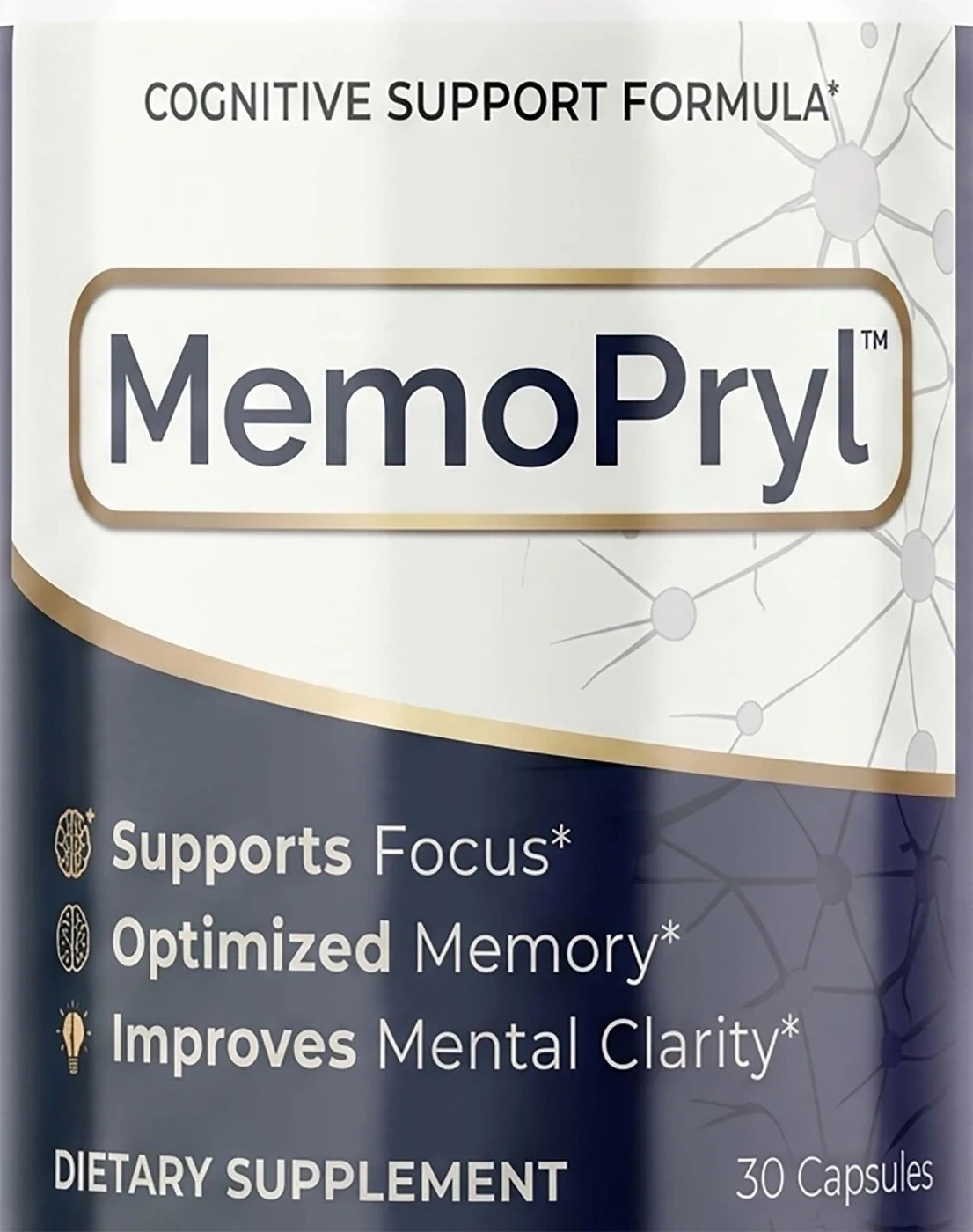
- Label A“Optimized Memory*”MemoPryl itself has not been tested in a trial. Ginkgo did not lower dementia rates against placebo in the 3,069-person GEM trial, and NCCIH calls the evidence for most supplements inconclusive. (DeKosky 2008, GEM trial, JAMA) (NCCIH, Supplements and Cognition)
- Label A“Improves Mental Clarity*”'Improves' is a strong verb to use in a structure/function claim. A meta-analysis of bacopa trials lasting 12 weeks or more found faster attention at 300 mg or more of extract, an amount none of the bottle images prints. (Kongkeaw 2014, Bacopa meta-analys.) (LiverTox, Bacopa monnieri)
- Label A“Supports Focus*”St. John's wort was studied for mood rather than focus, and glutamine has no memory trial. None of the bottle images prints an amount for any ingredient. (NCCIH, St. John's Wort in depth) (MSK, Glutamine)
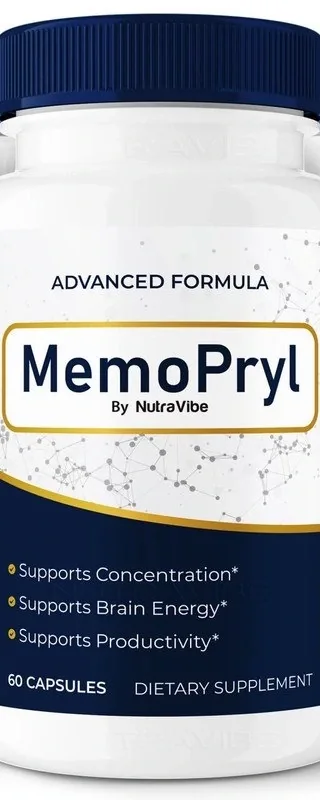
- Label B“Supports Concentration*”The evidence is for single ingredients, at doses this site cannot see. A health claim generally needs randomized human tests of the product itself. (FTC, Health Products Guidance)
- Label B“Supports Brain Energy*”'Brain energy' is not something medicine measures. In dementia, a Cochrane review found acetyl-L-carnitine had no effect on severity. (NIH ODS, Carnitine) (Pennisi 2020, ALC in dementia)
- Label B“Supports Productivity*”Supplement trials do not measure productivity. In the FTC's view, personal stories are never enough to back a health claim. (FTC, Health Products Guidance)
- Both labelsThe FDA asteriskStructure/function wording is permitted when the FDA disclaimer goes with it. It is neither FDA approval nor a disease claim. (FDA, Structure/Function Claims)
- Badges“Doctor formulated”, “GMP certified”, “FDA registered”None of them names a doctor, certifier or audit. FDA registers facilities but approves neither them nor the supplement. (FDA, Hidden Ingredients) (FDA, Using Dietary Supplements)
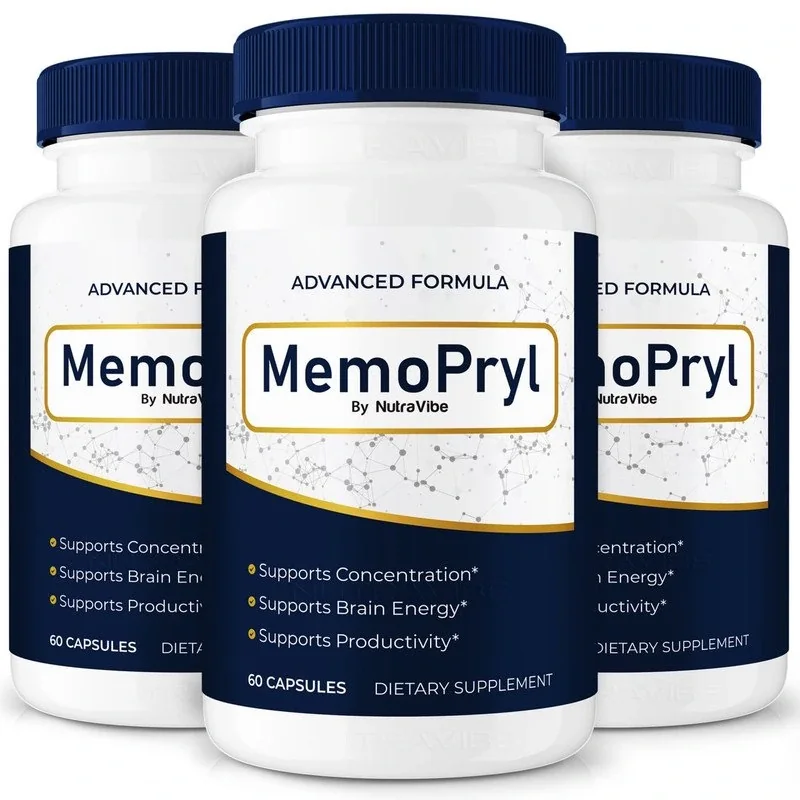
- Bottle30 capsules and Cognitive Support, or 60 capsules and Advanced FormulaThe brand set's two bottle images do not agree. Only the bottle you receive settles it.
The claims exactly as the two bottle images print them. A health claim needs competent and reliable scientific evidence, usually human trials of the same product (FTC, Health Products Guidance).
MemoPryl: capsules in 2, 3 or 6 bottlesRead the bottle · check medicines first · 60-day window (confirm)
See packsDoes MemoPryl use the FDA phosphatidylserine claim?
Not on any image we have. The bottles carry focus, memory and energy wording, not dementia wording.
Phosphatidylserine is one of six names tied to MemoPryl through a sibling pack, and no amount is printed. The trial behind most memory talk used 100 mg or 300 mg a day in 78 adults, with mixed results (Kato-Kataoka 2010, soy PS trial). Read more in our guide to whether brain supplements work.
Thinking about MemoPryl?Check your medicines with a pharmacist first. The checkout confirms prices and the 60-day window.
Middle pack
3 bottles
Not listed on the packNot listed on the pack a bottle · Not listed on the pack
Get 3 bottlesLargest pack
6 bottles
Not listed on the packNot listed on the pack a bottle · Not listed on the pack
Get 6 bottlesUntil the seller confirms its list, prices stay as fill-in fields. The checkout shows the final total.
FAQ01
Questions people ask about MemoPryl
What is a qualified health claim?
A qualified health claim is a statement about a food or supplement and a disease risk that carries a disclaimer because the evidence is limited. The 2003 phosphatidylserine letter is one, and its disclaimer says there is little scientific evidence.
When did FDA respond to the phosphatidylserine petition?
FDA's letter is dated May 13, 2003. It addressed a petition about phosphatidylserine and cognitive dysfunction, and it allowed two claims only with required disclaimer wording.
Can a supplement label make a dementia claim?
Not a drug claim. A supplement is not meant to diagnose, treat or prevent a disease, and every label claim carries the FDA disclaimer. MemoPryl makes no dementia claim.
Who wrote this02
Written and reviewed by
Each page draws on the bottle images, the seller's product notes and linked NIH, FDA, FTC and peer-reviewed sources.
Last updated . See our editorial standards and how we check reviews. This website is run by MemoPryl USA retail, not by the manufacturer or the distributor of the bottle. We are paid a commission when you buy through our order links.
Keep reading
Related MemoPryl reading
MemoPryl USA retail
Ready to look at MemoPryl?
Read the bottle you receive and go over your medicines with a pharmacist before you pick a pack. The checkout confirms prices and the guarantee terms.
- Order desk: +1 (302) 200-3480
- 60-day window (confirm at checkout)
- Ships from the U.S. unless the checkout says otherwise